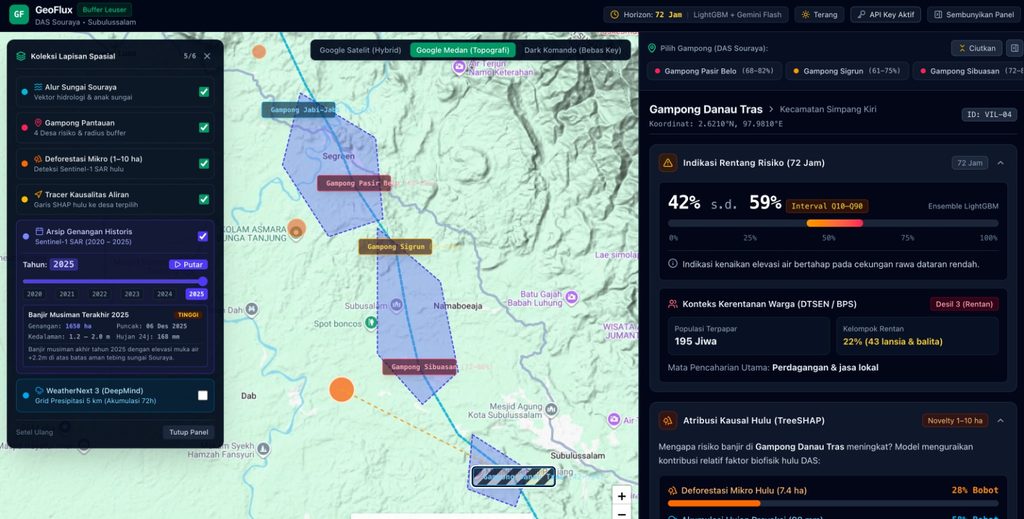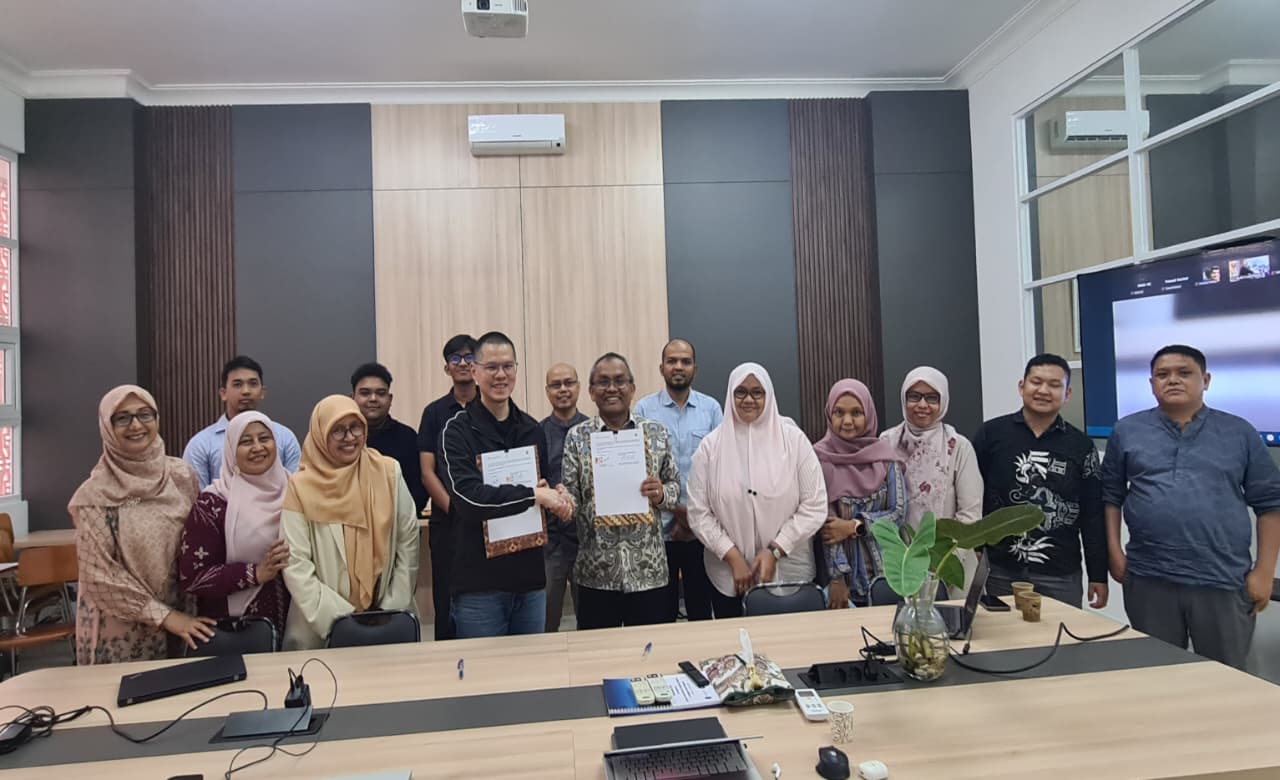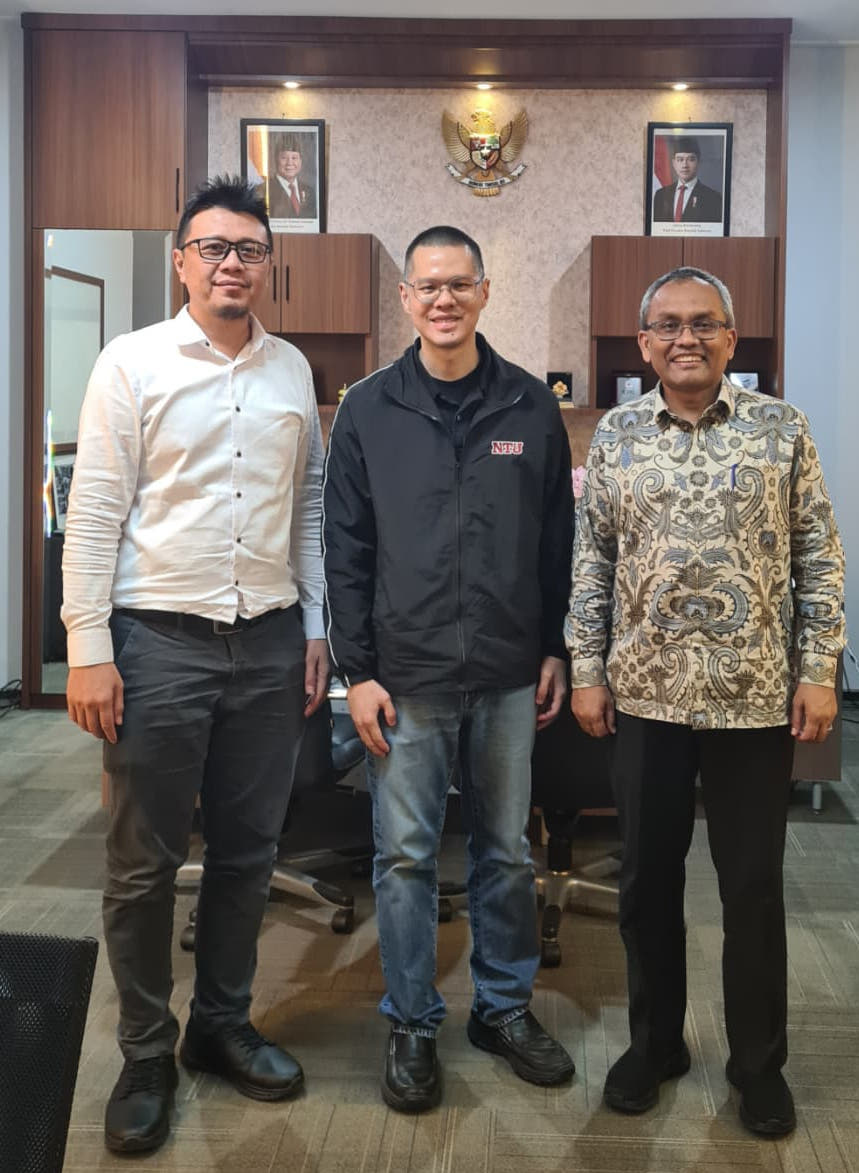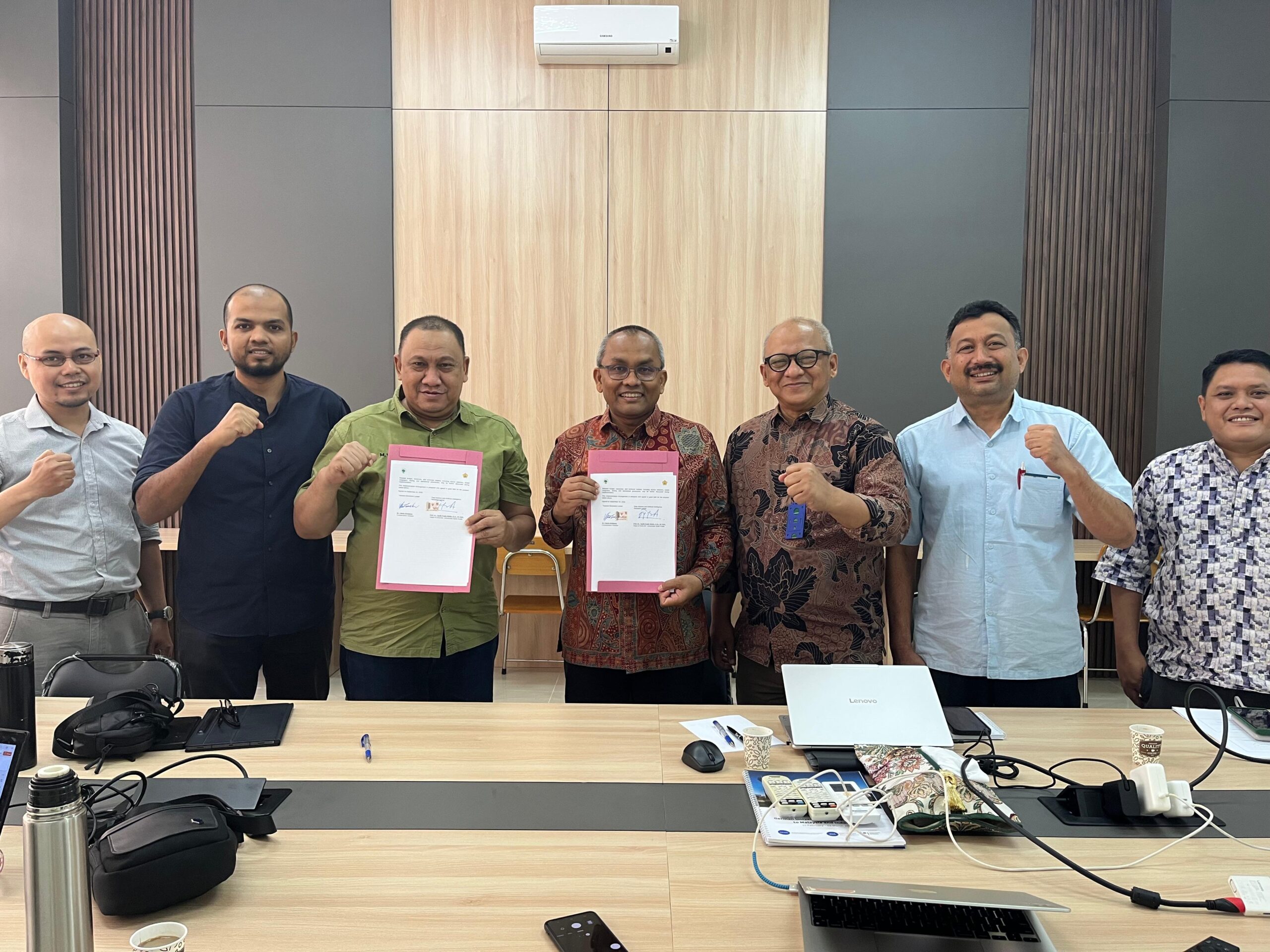

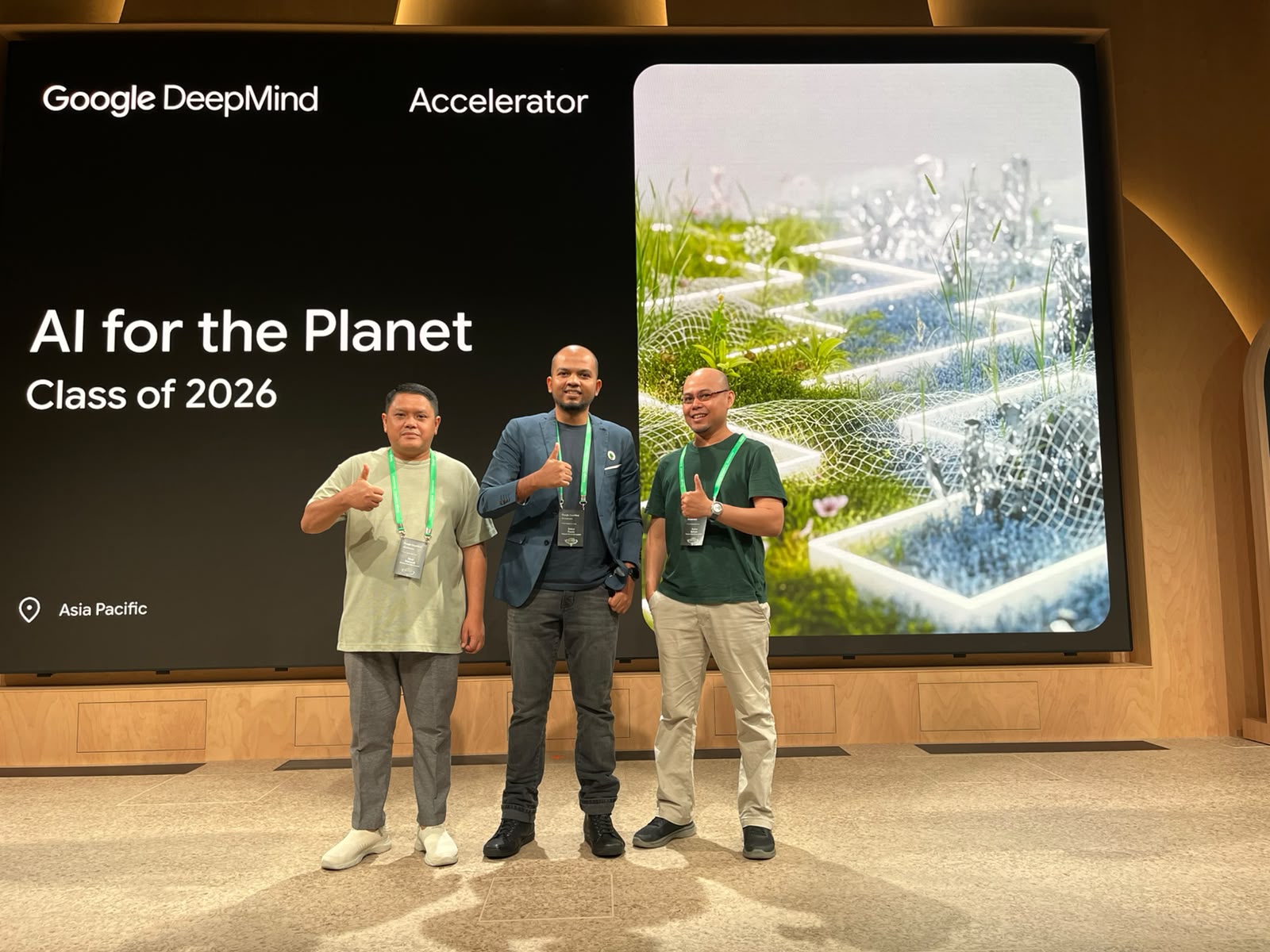
Rizal Wahyudi, a researcher at the Data Science and Artificial Intelligence Research Center (DSAI-RC) and a software developer at UPT. DTI Universitas Syiah Kuala (USK), took part in Google’s AI for the Planet Accelerator at the company’s Asia Pacific Headquarters in Singapore. The program, a global initiative directing artificial intelligence toward critical environmental challenges, selected sixteen organizations worldwide. Among them was Yayasan Ekosistem Lestari (YEL), which entered with GeoFlux — an AI platform that predicts the likelihood of flooding across Aceh Province, developed jointly by YEL, DSAI-RC USK, and UIN Ar-Raniry. Wahyudi attended on behalf of DSAI-RC USK, alongside Zaki representing YEL and Zuhra representing UIN Ar-Raniry.
The program opened with remarks from Sanjay Gupta, President of Google APAC, followed by an introduction to the Google DeepMind team and a briefing on the week ahead. On the second day, DeepMind assigned dedicated mentors, who worked through GeoFlux’s product decisions, design, and technical architecture so that the platform might respond more directly to conditions on the ground.

The third day turned technical, with training on AI Antigravity, a platform that can run AI models directly on the data participants brought with them and present the computed results interactively, easing the analysis of geospatial information. The fourth day returned to mentoring, this time on growth strategy, long-term development planning, and impact mapping, so GeoFlux’s benefits could reach a wider audience. The closing day focused on the OKR (Objectives and Key Results) methodology, giving the team a structured way to set targets and measures for the platform’s next phase of development.
Throughout the week, the organizers handled the arrangements — airport transfers, accommodation, and access across Google’s Singapore offices — with notable care. For DSAI-RC at USK, the week’s value went beyond technical instruction: it placed a locally built flood-prediction system among sixteen of the world’s environmental AI efforts. It sent it home with a sharper development plan and a firmer foundation for the center’s ongoing collaborative research.